
Creating a future information environment
in the field of informatics
Human intellectual activities developed by utilizing information technology. We fully understand its social and cultural foundations and create a future information environment.
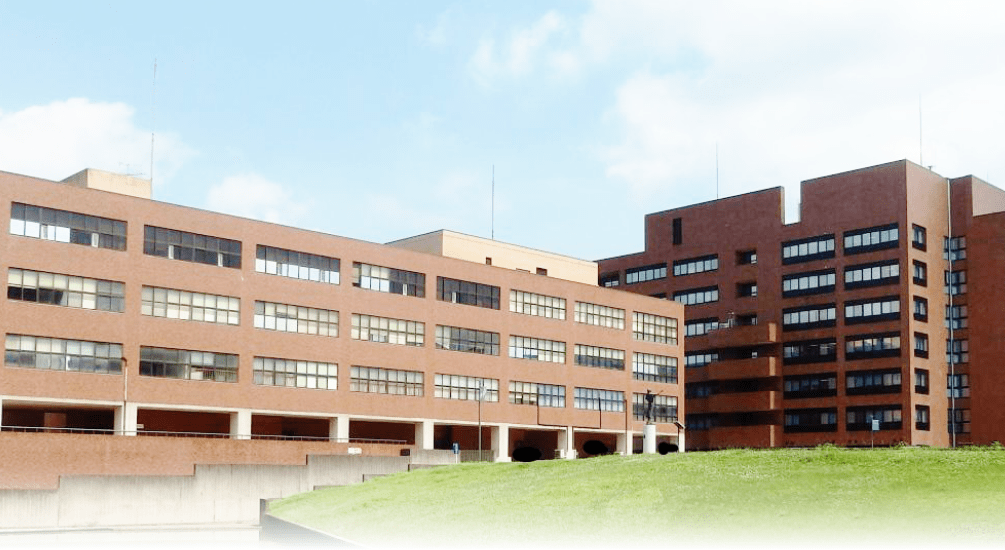
School Of Informatics
About the School of Informatics at the University of Tsukuba
The School of Informatics is an undergraduate school, founded in April 2007, aimed toward nurturing specialists in computer science and engineering to deal with the increased dependence on computer systems and networks in recent years. The School offers cutting-edge curricula while maintaining the traditions of the University of Tsukuba, originally founded in 1872, as the Tokyo higher normal school, one of the oldest universities in Japan.
The School is a major international institution for research and education in information science, computer science, and engineering. Additionally, it is one of the largest institutions in Japan and covers theory, practice, research and education from both software and hardware perspectives. There are more than 130 academic members (professors, associate professors and assistant professors) in the School.
- Address
- : Kasuga 1-2 Tsukuba Ibaraki, 305-8550, Japan
- Tel
- : +81-(0)29-859-1110
- : inquiry-inf@inf.tsukuba.ac.jp
Our society and culture have been built on the knowledge and technologies to create, express, record, use and share information and knowledge of our communities. The progress of the information and communication technologies of today has greatly affected communication between humans. The revolutionary growth of the networked information society over the last decade would not have been possible without the rapid progress of the Internet and mobile phone networks.
This fundamental change of our information environment has deeply affected our lives in business and at home. The change has significantly increased the need not only for developing new information technologies but also the need to gain a thorough understanding of our networked information society. The School of Informatics, which is a new school at the University of Tsukuba dedicated to informatics for the 21st century, consists of three colleges:
- the College of Information Science.
- the College of Media Arts, Science and Technology.
- the College of Knowledge and Library Sciences.
The School of Informatics is creating leading professionals who have a profound understanding of the science and technology of information and knowledge and are qualified to work in the growing networked information society.
Dean’s greetings
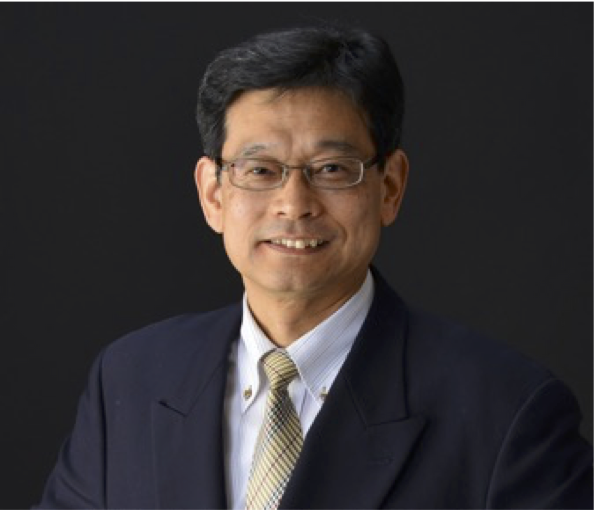
April 2026
Dean of School of InformaticsTohru Kawabe
Nearly 20 years since our founding in 2007, the School of Informatics stands at a major turning point. Our mission goes beyond simply teaching technology. We seek to examine the roots of human intellectual behavior, society, and culture, while unraveling the processes of recording, storing, sharing, and utilizing information through the lens of science and technology. Our goal is to develop and send out into the world “individuals capable of designing the future information environment.”
When this School began, the world had just gained a new freedom through the “constant connectivity” of smartphones and social media. Today, that evolution has only accelerated. We are now in an era where Digital Transformation (DX)—driven by AI, Big Data, and Cyber-Physical Systems (CPS) that merge the physical and digital worlds—is poised to make our society richer and more dramatic.
To lead in these turbulent times, the School of Informatics offers three distinct fields of study:
College of Information Science (Capacity: 86 freshmen, 14 transfers):
Exploring the depths of computer science and mastering the core of technology.
College of Media Arts, Science and Technology (Capacity: 54 freshmen, 14 transfers):
Fusing technology with sensibility to create new forms of expression and value.
College of Knowledge and Library Sciences (Capacity: 100 freshmen, 10 transfers):
Designing the structure of knowledge and acting as a bridge between society and information.
Our faculty of approximately 140 experts covers an incredibly vast range of disciplines—from STEM fields like programming, mathematical science, and communication/media processing to humanities and social sciences such as cognitive science, content creation, information management, and library science. Furthermore, we provide abundant opportunities to hone “real-world skills” beyond the classroom through industry-academic collaboration programs like the “Embedded Technology Campus OJT” and practical IT talent development programs like “enPiT.”
The University of Tsukuba aims to be a frontrunner that constantly envisions and strives to realize the future. In this campus where the infinite possibilities of “Informatics” unfold, why not learn, struggle, and grow together to create a future yet unseen? We look forward to meeting students filled with dreams, hope, and, above all, the passion to “know.”
Overview of Colleges in the School of Informatics
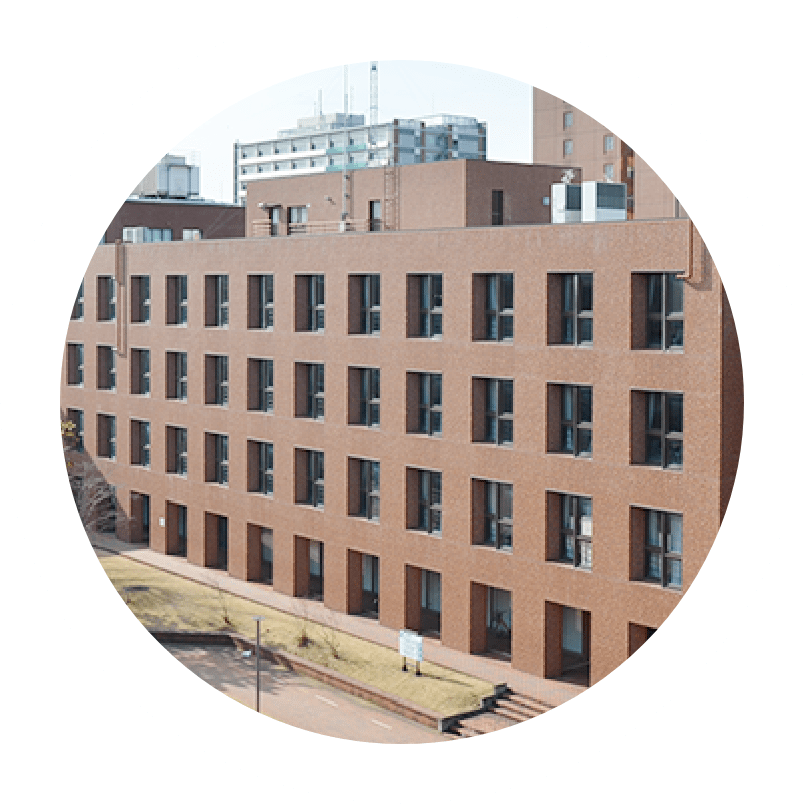
Pioneer of information and communication technology
College of Information Science
The College of Information Science offers an integrated education in computer science, spanning foundational theories, mathematics, and programming to applied fields such as algorithms, artificial intelligence, media processing, and information systems. As students deepen their studies, they pursue one of three major areas -Software Science, Information Systems, or Intelligent Media- building a strong foundation in information technology and the advanced expertise to drive the future of computing.
- Address
- : Office for the College of Information Science at the University of Tsukuba, 1-1-1 Tennodai, Tsukuba, Ibaraki, 305-8573, Japan
- Tel
- : +81-(0)29-853-4962

Advanced application of information technology
College of Media Arts, Science and Technology
The College of Media Arts, Science and Technology explores the integration of information technology with design and creative expression to develop new media and services. Students study the scientific and engineering principles of media processing, interaction, and system design, while gaining hands-on experience from concept development to production and dissemination. This approach cultivates professionals capable of uniting technology and creativity to generate new value.
- Address
- : Academic Service Office for the Library, Information and Media Sciences Area at the University of Tsukuba, 1-2 Kasuga, Tsukuba, Ibaraki, 305-8550, Japan
- Tel
- : +81-(0)29-859-1110
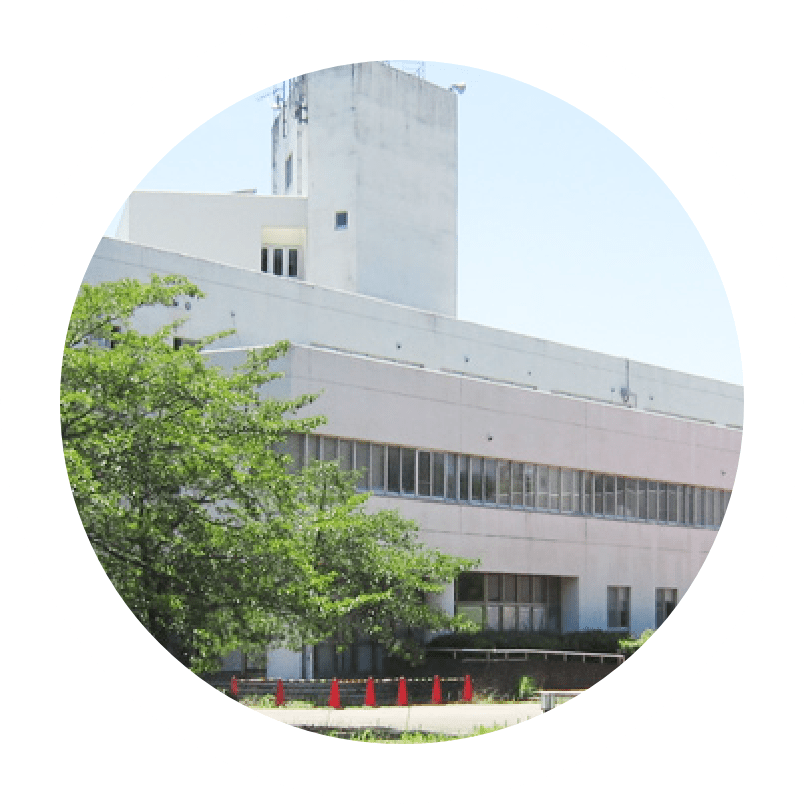
Knowledge building for the future
College of Knowledge and Library Sciences
The College of Knowledge and Library Sciences examines the sharing of knowledge -from AI and social media to libraries- through a multidisciplinary lens spanning human, technology, and society. From the third year, students enroll in one of three majors and engage in knowledge extraction, information retrieval system design, and the planning and management of information services. They acquire the ability to meet diverse information needs, create new knowledge, and connect people with information in meaningful ways.
- Address
- : Academic Service Office for the Library, Information and Media Sciences Area at the University of Tsukuba, 1-2 Kasuga, Tsukuba, Ibaraki, 305-8550, Japan
- Tel
- : +81-(0)29-859-1110